WILTSHIRE
Geometry of the Field
Your opponent chooses your tile. You choose where it goes.
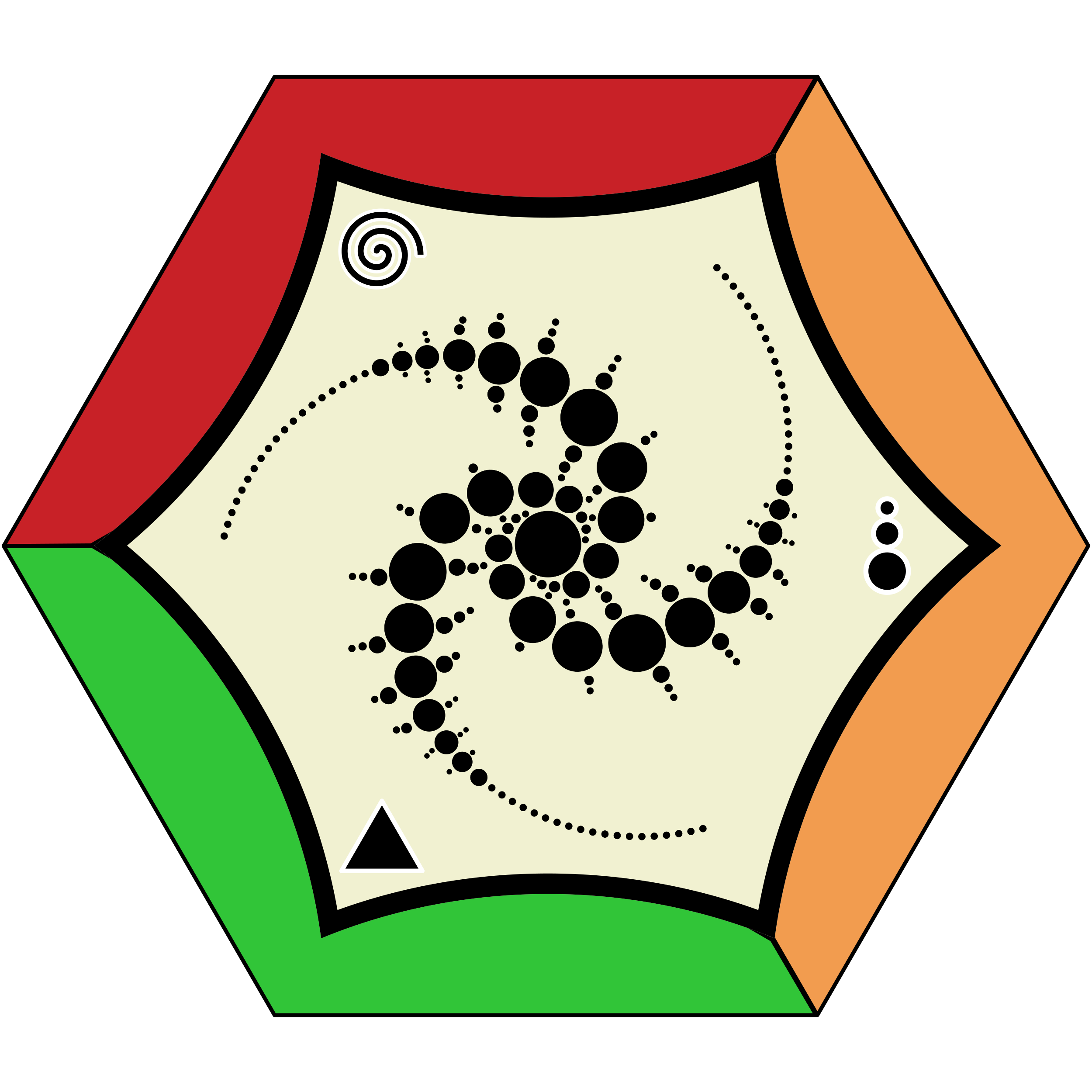
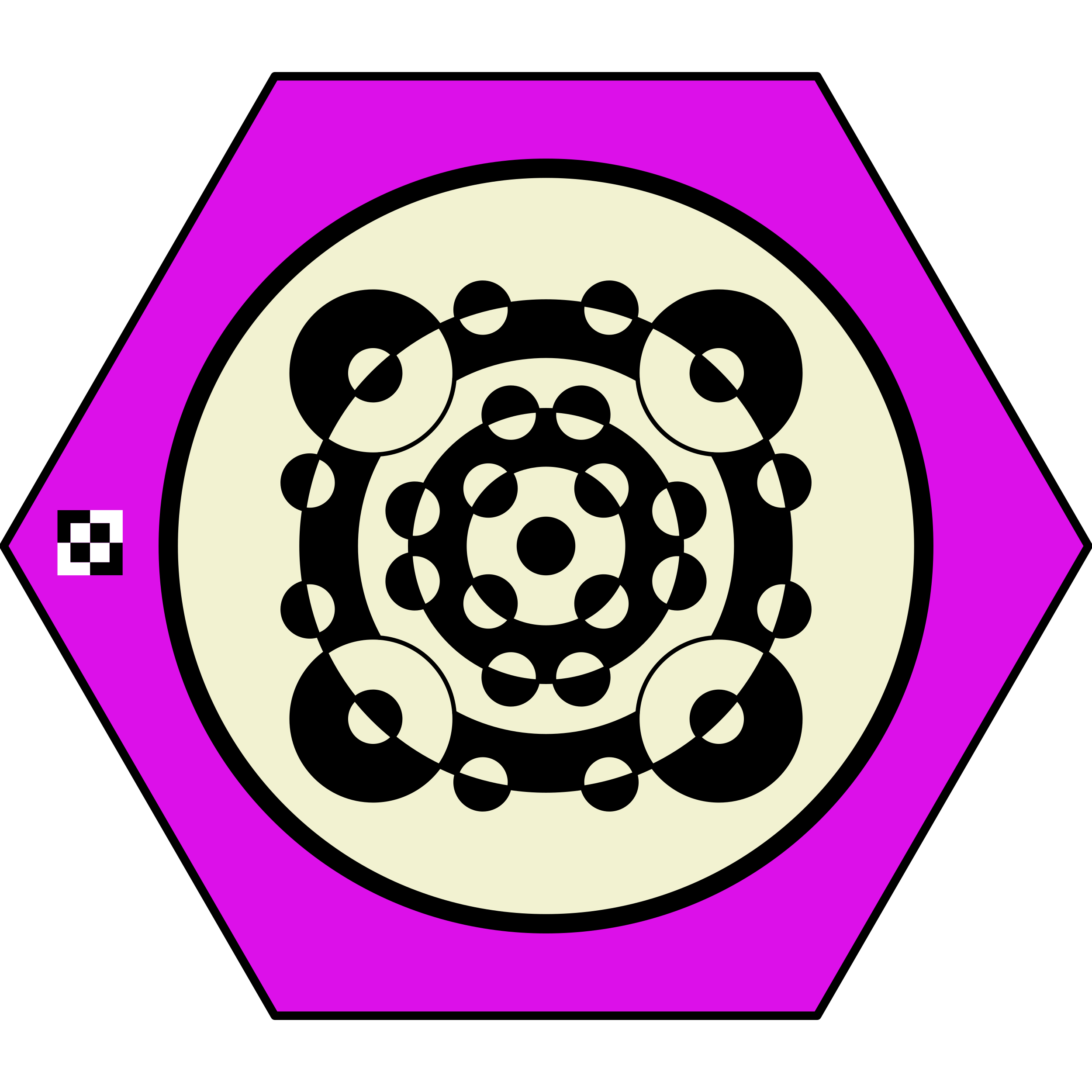
Wiltshire is a strategy game of shared patterns and carefully chosen gifts. Work with six geometric themes: Spiral, Fractal, Triangular, Linear, Crescent, and Optical. Complete a winning line or triangle before your opponent does.

Choose one of the remaining face-up tiles from the shared supply and hand it to your opponent. They decide where it goes, then choose a tile for you to place. All tiles on the board are shared: either player can use them to complete a winning pattern. Every gift asks the same question: what can your opponent do with it?
A promising pattern is not yours to keep. Your opponent can withhold the tile you need, and your next placement may change which gifts are safe to give. Look beyond a single unfinished line or triangle. Can you leave your opponent without a safe gift, while preserving a safe choice for yourself?


Hand & Place
Choose your opponent's tile, then place the one they choose for you. Play solo against the AI or share the screen with a friend for local two-player play.
Complete a Pattern
Complete a straight line of three adjacent tiles, a triangle of three mutually adjacent tiles, or either, depending on your chosen rules. You need one single, one dual, and one triple, all sharing the same theme. The player completing the pattern wins.
Mind the Centre
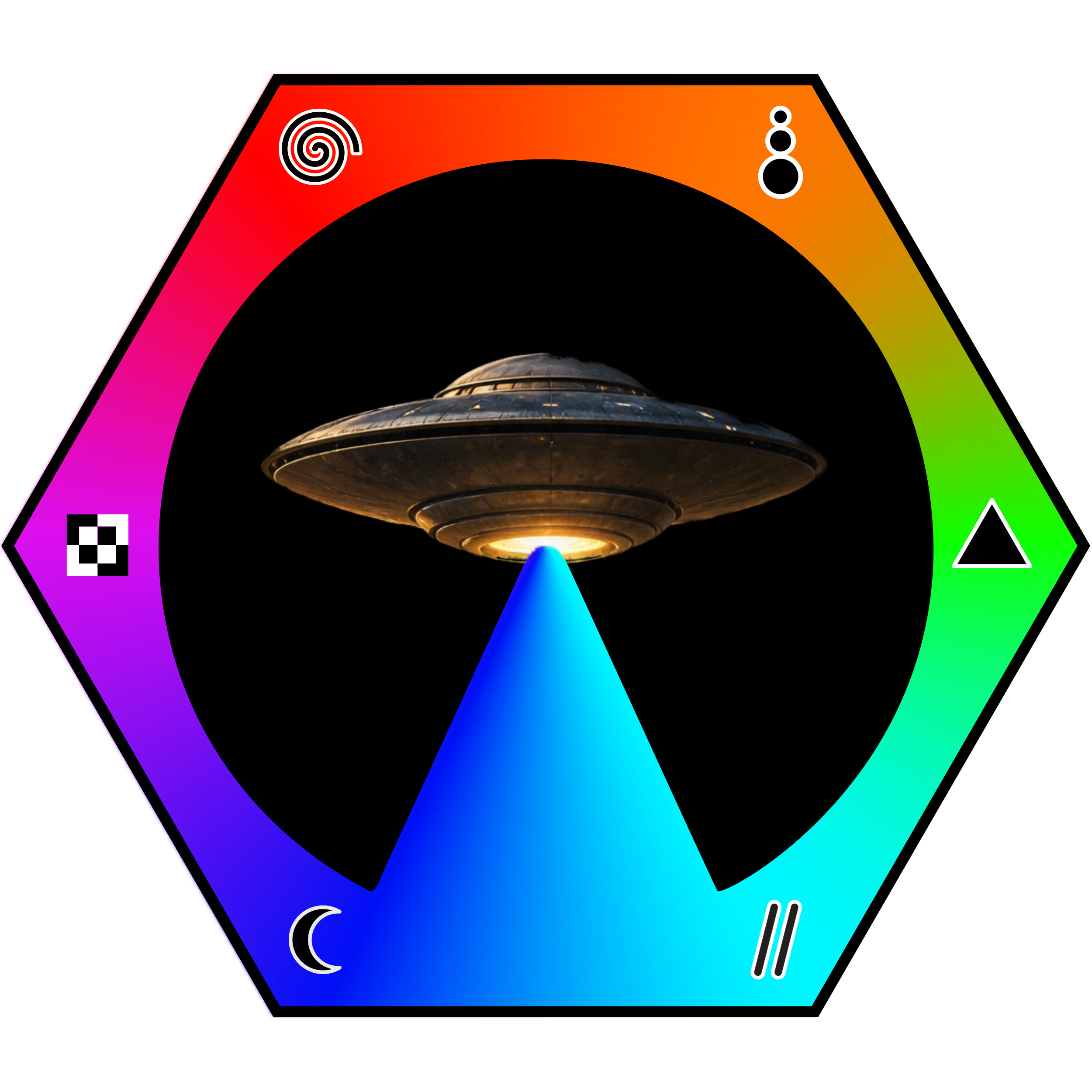
Choose the Harvester to exclude the centre from winning patterns, or the UFO to make it a wildcard that can supply a missing category and match a shared theme.



Wiltshire draws on crop-circle imagery and geometric symbolism without asking you to accept any particular explanation of the phenomenon. The formations provide the visual language and atmosphere; the contest is one of patterns, placement, and choice. For the designer's take on the phenomenon itself, read Crop Circles: A Mirror of Our Times (free PDF).